 The Butcher is the Chef
Ask us at the counter
How we'd cook it
Every one of these gets cooked at home before it goes anywhere near the cabinet. No fifteen-ingredient nonsense. Just the cut, the heat, the timing, and the bit most people get wrong.
This week's winning recipe
Cooked something worth sharing? Tell us in store or on Facebook. Each week's winner goes up here with their name on it.
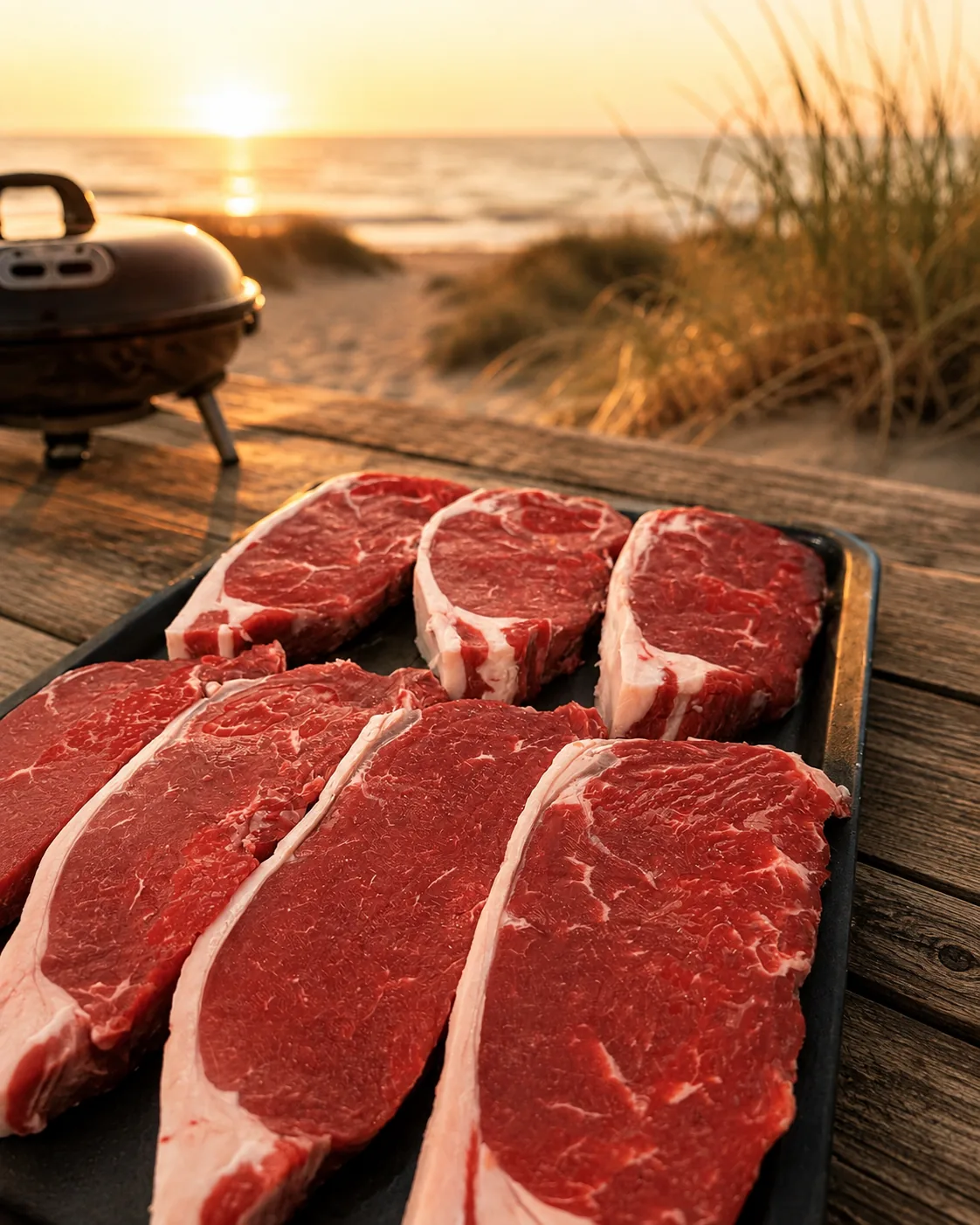
01Porterhouse, cooked properlyIf you only learn one thing from us, make it this. Most steak is ruined by a cold pan and no rest.
What you need
- 2 porterhouse, 3cm thick
- Salt flakes
- Neutral oil — not olive
- 50g butter
- 2 garlic cloves, skin on, squashed
- A few sprigs of thyme
Method
- Out of the fridge 40 minutes before. A fridge-cold steak cooks grey on the outside before the middle wakes up.
- Pat both sides bone dry with paper towel, then salt generously. Wet meat steams; it won't brown.
- Heavy pan on high until it's just starting to smoke. Oil the steak, not the pan.
- Lay it down away from you and leave it alone. Three minutes. Don't poke it, don't move it.
- Flip once. Another 3 minutes for medium-rare on 3cm. Sear the fat edge by holding it on its side for 30 seconds.
- Butter, garlic and thyme into the pan. Tilt and spoon it over for the last minute.
- Onto a warm plate and rest 6 minutes minimum. Cut it early and the juice ends up on the board instead of in the steak.
Tip: Ask us for a thick cut, not two thin ones. Thin steak gives you no window between raw and overdone. We'll cut it to 3cm if you ask.
02Pork fillet, bacon-wrapped with halloumiOne of ours from the cabinet, and it's easy enough to build at home. The bacon bastes the fillet as it renders.
What you need
- 1 pork fillet, trimmed
- 8–10 rashers streaky bacon
- 120g halloumi, in batons
- Handful of parsley, chopped
- Cracked pepper, no salt
Method
- Oven to 200°C. Butterfly the fillet — cut it most of the way through lengthways and open it like a book.
- Lay the halloumi down the middle with the parsley. Pepper it. Skip the salt entirely; the bacon and halloumi bring plenty.
- Fold it closed. Lay the bacon out slightly overlapping, sit the fillet across it, and roll it up tight.
- Sear seam-side down in a hot ovenproof pan for 2 minutes to glue the bacon shut, then turn to colour all over.
- Straight into the oven for 22–25 minutes. You're after 62–65°C in the thickest part.
- Rest 10 minutes before slicing into thick rounds. It'll carry up a few degrees while it sits.
Tip: Don't overcook it. Pork fillet is lean — past 70°C it goes dry and there's no rescuing it. This is the one cut worth owning a thermometer for.
03Pork bones boil-upOur Māori and Islander regulars keep us honest on these. Plenty of meat left on the bone, and that's the whole point.
What you need
- 1.5kg pork neck bones
- Big bunch pūhā or watercress
- 4 potatoes, halved
- 1 kūmara, thick slices
- 1 onion, quartered
- Salt, pepper
Method
- Bones into a big pot, cover well with cold water, bring to the boil.
- Boil hard for 10 minutes, then tip the whole lot out and rinse the bones and the pot. This first water carries the scum — losing it is what keeps the broth clean.
- Back in the pot with fresh cold water and the onion. Simmer gently, lid ajar, for 1½ hours until the meat is falling away.
- Potatoes and kūmara in. Another 20 minutes until a knife slides through.
- Wash the pūhā hard and rub it between your hands to knock the bitterness out. In for the last 10 minutes.
- Season at the end, not the start — the broth reduces and you'll oversalt it.
Tip: Ask us for neck bones with a decent covering of meat. Say it's for a boil-up and we'll put the good ones aside.
04Snags that don't splitOurs are filled fresh, so there's no filler holding them together. Cook them hot and they burst. Here's the fix.
What you need
- 8 sausages, whatever's in the flavour rotation
- Splash of water
- Small knob of butter to finish
Method
- Never prick them. Every hole you make lets the fat out, and the fat is the flavour.
- Cold pan, medium-low heat, sausages in, splash of water and a lid on. Six minutes.
- Lid off, let the water cook away. They're now cooked through and gently, not blasted.
- Heat up slightly and turn them every couple of minutes for 6–8 minutes until browned all over. Tongs, not a fork.
- Butter in for the last 30 seconds and roll them through it.
- Rest 2 minutes. Yes, even snags — cut straight in and they'll spill.
Tip: On the barbie: same rules. Medium heat on one side, cool zone on the other. Start cool, finish hot. Flames touching sausages means burnt skin and raw middle.
05Marinated kebabs on the barbecueAlready marinated when you pick them up, so the only thing left to get wrong is the heat.
What you need
- 8 marinated skewers from the cabinet
- Lemon or lime
- Nothing else — the work's done
Method
- Barbecue on medium. High heat burns the marinade black before the chicken is anywhere near cooked — this is the mistake everyone makes.
- Out of the fridge 20 minutes before so they don't hit the grill cold.
- Skewers on, lid down if you've got one. Three to four minutes a side, turning through all four faces — 14 minutes all up.
- Check the thickest piece: juices run clear, no pink at the centre. Chicken thigh is forgiving, so a minute extra won't hurt.
- Squeeze of lemon over the lot while they're still hot. Rest 3 minutes.
Tip: Bamboo skewers? Soak them 30 minutes first or the ends burn through and you'll be chasing chicken across the grill.
06Sunday lamb shoulderShoulder over leg every time for a slow roast. More fat, more connective tissue, and it forgives you if the timing slips.
What you need
- 2–2.5kg lamb shoulder, bone in
- 1 bulb garlic, halved across
- Rosemary, a few big sprigs
- 2 onions, thick slices
- 250ml water or stock
- Salt, pepper, olive oil
Method
- Oven to 220°C. Score the fat cap in a diamond pattern, cutting into the fat but not the meat.
- Oil, salt and pepper rubbed in hard, right into the scores.
- Onions in the base of the tray as a rack, lamb on top, garlic and rosemary tucked around. Water into the tray, not over the lamb.
- 25 minutes at 220°C to get colour on it.
- Drop to 160°C, cover tightly with foil, and give it 3 to 3½ hours. Top the water up if the tray goes dry.
- Foil off for the last 20 minutes to crisp the top back up.
- Rest 20 minutes under loose foil. It should pull apart with two forks — if it fights you, it needs another half hour.
Tip: The tray juices are the gravy. Skim the fat off, squeeze the roasted garlic out of its skins into it, and reduce it on the stove for five minutes.
Cook it to temperature, not to time
Every oven lies and every piece of meat is a different thickness. A $20 probe thermometer will do more for your cooking than anything else you can buy. Pull the meat off at these numbers. It climbs 3–5°C while it rests.
| Cut | Pull it off at | Where it lands |
|---|---|---|
| Beef & lamb, rare | 48–50°C | Cool red centre |
| Beef & lamb, medium rare | 52–54°C | Warm red centre. Where we'd stop. |
| Beef & lamb, medium | 57–59°C | Pink right through |
| Beef & lamb, well done | 68°C+ | Ask for a cheaper cut, honestly |
| Pork fillet & chops | 62–65°C | Slightly blush, still juicy |
| Chicken breast | 65°C | Carries to 70°C+, stays tender |
| Chicken thigh & drumstick | 75°C | Better higher. The fat handles it |
| Sausages | 70°C | Cooked through, not dried out |
| Slow-roast shoulder & brisket | 92–95°C | Falls apart. Time, not doneness. |
Rule of thumb for resting: half the cooking time, up to about 20 minutes. Steaks 5–10 minutes, a roast 20.
Tell us what you're cooking
Half of this job is knowing which cut suits what you've got planned. Come in and say "six people, Sunday, don't want to babysit it" and we'll sort you out, then cut it to the thickness you actually need.